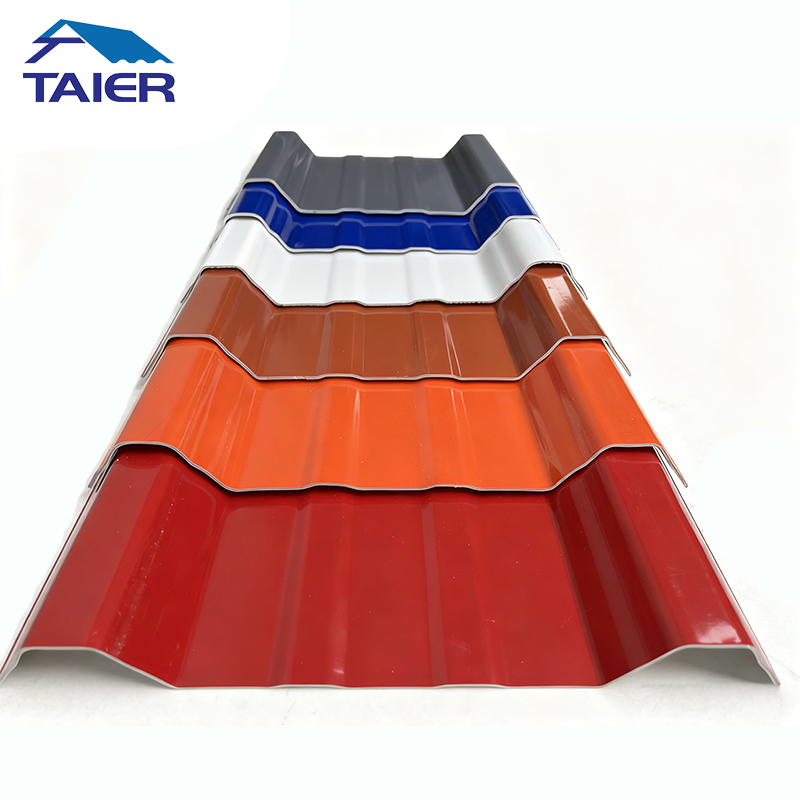
Trapezoidal PVC roofing tiles represent a modern advancement in roofing materials. In building construction, the main components are typically the foundation, the façade (including both interior and exterior walls), and the roof—each with its own corresponding materials. Traditionally, the primary function of roofing materials was waterproofing. For centuries, in the water-scarce northern regions, homes were often finished with simple mud plaster on pitched or flat roofs, while in the rainy south, tightly arranged clay tiles were essential. Today, environmental sustainability, thermal insulation, heat retention, and corrosion resistance have become critical requirements for roofing materials. PVC roof tiles have emerged as a leading option in this context.
Installation of Trapezoidal PVC Roof Tiles
The installation of trapezoidal PVC roof tiles demands careful attention to detail. Neglecting proper procedures can lead to deformation, leakage, and other issues that compromise construction quality and performance, potentially increasing overall costs.
First, during overlapping installation, the tiles should be overlapped laterally by one corrugation, with a longitudinal overlap of no less than 250 mm. The overlap direction should be determined based on water flow and wind direction.
Second, all fasteners must be installed in their designated positions and aligned vertically with the tile surface. Fasteners should not be over-tightened, as this may cause tile deformation or leakage.
Third, stainless steel tile hooks and matching stainless steel pressure plates are recommended for fixing. A plastic drill bit should be used, with a drill diameter approximately 1 mm larger than that of the fastener. Holes must be drilled smoothly to avoid stress concentration, and extra care should be taken when drilling in cold weather.
Fourth, a minimum of six fasteners per square meter is required. For trapezoidal PVC roof tiles installed along the perimeter of scaffolding areas, additional fasteners should be added, and the overhang of corrugated tiles beyond the eaves should not exceed 100 mm.
Fifth, the support span should be kept below 700 mm during installation to prevent sagging, deformation, or leakage of the tile surface.